DoseTracker
A judgment-free medication tracker designed to reduce missed doses
How to Review This Project
Open the demo and load Sample Data in Settings first — it makes the full workflow visible right away. From there, explore naturally. Then skim the PRD for the problem framing, key decisions, and proposed metrics.
The Problem
Medication routines break in the same predictable ways. You mean to take something later and forget. You snooze a reminder and never come back to it. You genuinely can't remember if you already took it. I noticed this pattern consistently with people close to me and started looking at what existing apps were doing about it. Most were either too cluttered to use daily or fired generic reminders that became background noise. None of them were built around the specific moments where follow-through actually falls apart.
What I Built
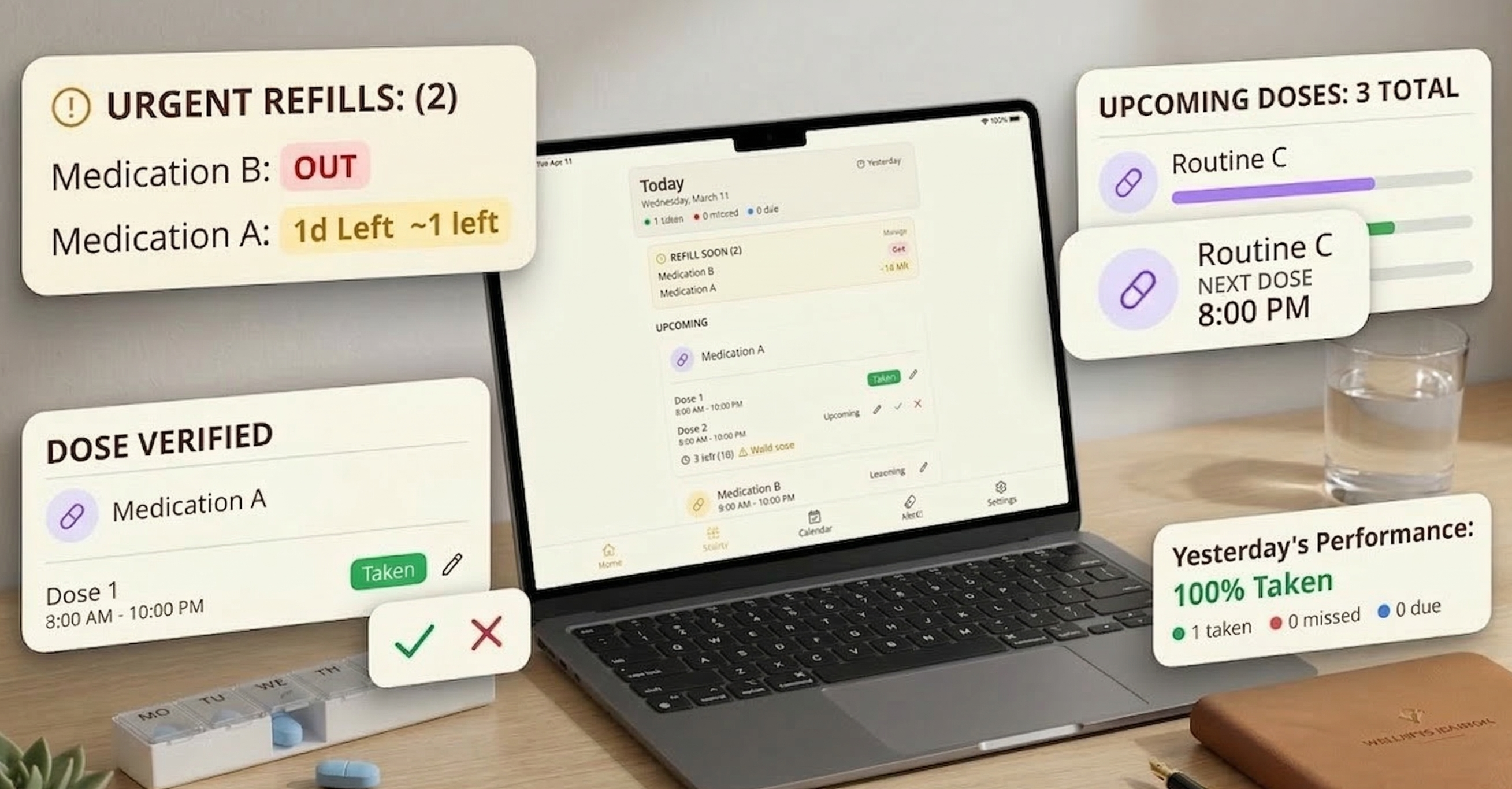
DoseTracker helps people track whether they've taken their medications each day without turning it into a chore. Instead of exact alarm times, users set dose windows, a range like 8am to 10am, which removes the pressure of hitting a specific minute. A Today screen shows what's due now, what's coming up, and what's already been logged. Each dose gets marked Taken or Missed with minimal taps, and the app nudges you during the window without overwhelming you with notifications. When a window closes with nothing logged, the dose is automatically marked missed so the record stays accurate without any extra work. Users can correct mistakes through a Yesterday summary or a weekly and monthly calendar view, and optional supply tracking surfaces a refill warning before you run out. I ran 5 usability sessions focused on the core daily flow and everyone found it intuitive.
How I'd Evolve It
Next I'd put it in front of people who manage daily medication routines and watch where follow-through still breaks. I'd pay attention to the moments that feel uncertain: marking a dose, correcting a mistake, and staying on top of reminders without feeling like the app is pestering you. From there I'd iterate on small UX changes that make the experience feel calmer, clearer confirmations, easier edits, and a reminder approach that nudges without nagging. Longer term, I'd explore letting the app learn from your own logging patterns and adjust reminder timing accordingly, so it gets better at reaching you at the right moment the more you use it.