PackSmart
A smart packing list generator built around how people actually travel
How to Review This Project
Try the demo first — enter your trip details, generate a packing list, and customize it end to end. Then skim the PRD for the problem framing, scope decisions, and success metrics.
The Problem
Packing is one of those tasks that feels simple but consistently breaks down. Most people rebuild the same checklist from scratch every trip, spend too long estimating how many clothes to bring, and still forget something obvious. Generic tools like Notes or a spreadsheet give you nothing to start from and no way to adapt to how a specific trip changes what you actually need.
What I Built
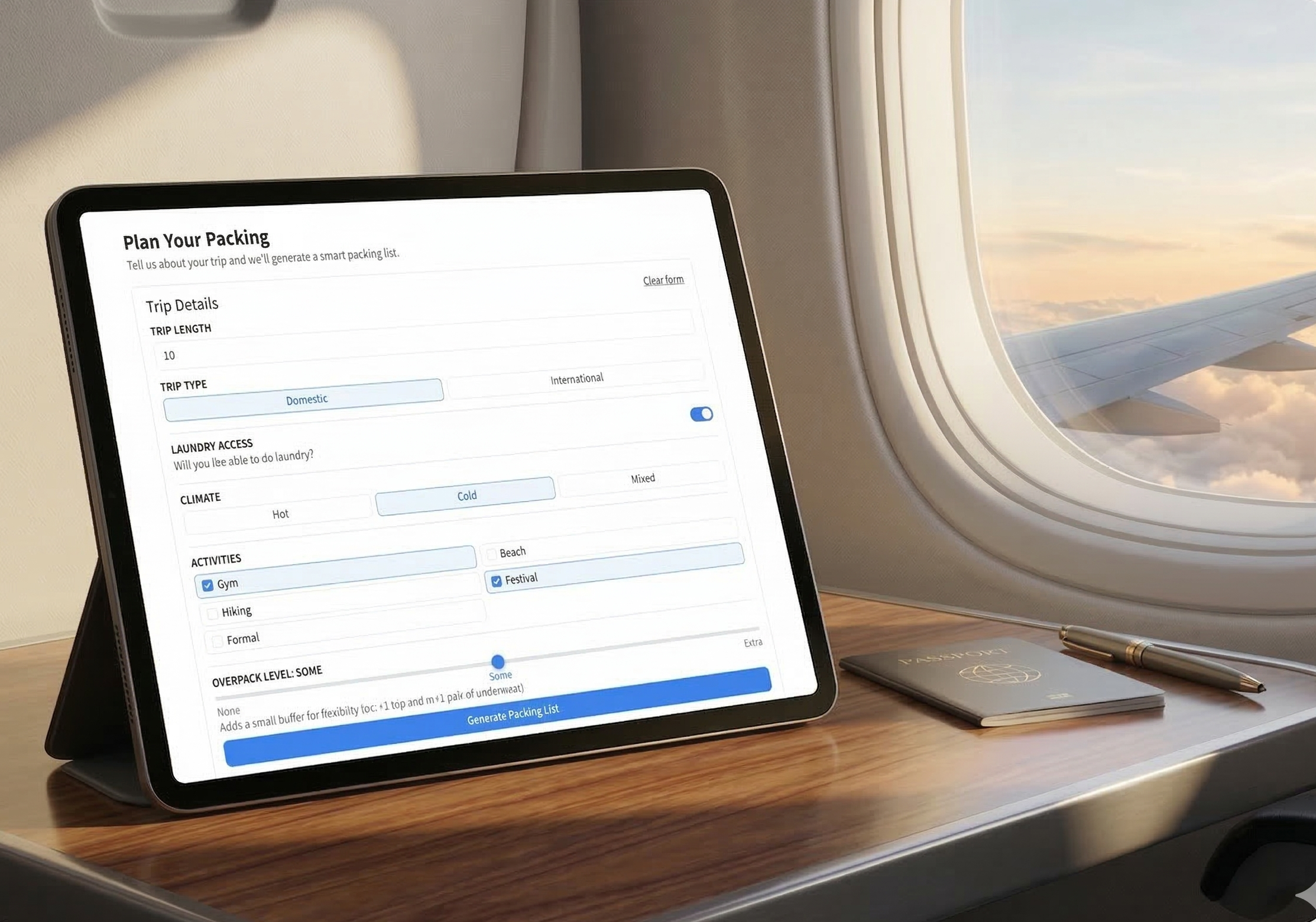
PackSmart lets you enter a handful of trip parameters, things like trip length, climate, laundry access, and activities, and instantly generates a complete categorized packing list. Clothing quantities scale automatically based on how long you're going and whether you'll have laundry access. Context-specific items get added based on your destination type and activity toggles. The list is fully editable from there: adjust quantities, add or delete items, reorder within categories, search while packing, and save trips to reuse for recurring travel patterns. Everything runs locally with no accounts or cloud sync needed. I built a full PRD for this project and ran 5 usability sessions after shipping. All 5 users said it was faster and less stressful than starting from scratch. 4 out of 5 named clothing quantity guidance as the single most useful part.
How I'd Evolve It
Next I'd put it in front of 5 to 10 people who travel differently and watch how they use it. I want to see if the inputs feel intuitive and whether the generated list feels accurate without heavy editing. From there I'd tune the rules based on real patterns: what items people consistently add, what they delete, and where quantities always get adjusted. If that's working well, the next step could be integrating a weather API to sharpen climate recommendations, but only if it improves accuracy without making the product feel less predictable or harder to trust.